By Madeline Miller
Published: April 18, 2018
Read August 15, 2021
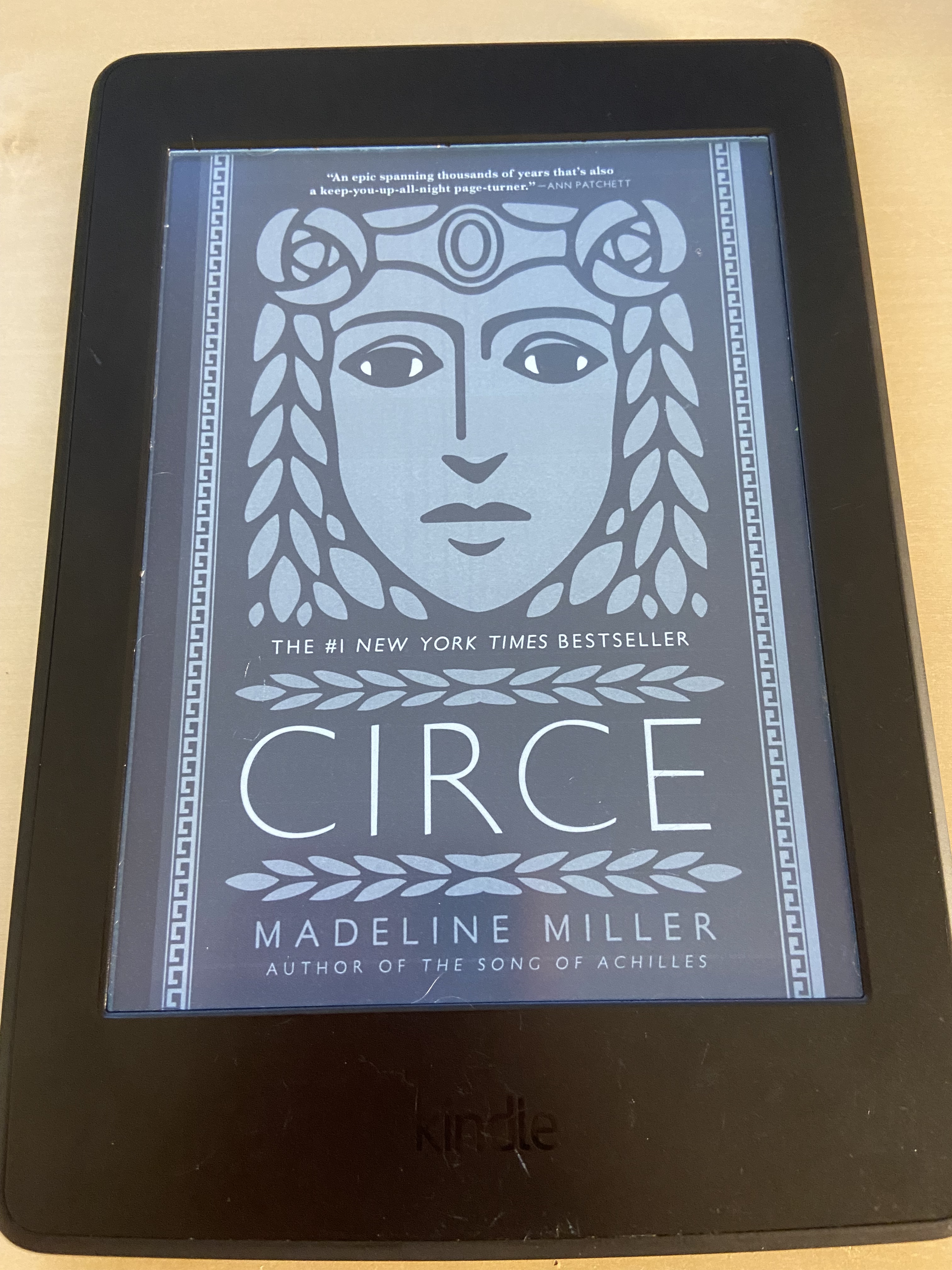
Circe is a retelling of Greek myths following the demi-goddess Circe, which is why Madeline Miller decided to call the novel about Circe, ahem, Circe.
I haven’t dipped my toe back into Greek mythology in many many travels of the chariot of Helios, so Circe for me was a wonderful return to that world. I love the world building around each of the characters and seeing the fresh (at least to me) perspective on the pantheon of gods, mortals, heroes, and monsters. At the same time I greatly enjoyed the personal stories here. the specific character of Circe really resonated with me in the struggles on what it means to live that I haven’t seen recently. I believe some might add “… as a woman” in some reviews, but I’m not exactly the expert on that particular subject.
As I made my way through the book, I saw the men of Ancient Greek myth weave in and out of Circe’s life as she (mostly) remains on her island. Hermes, Daedelus, Odysseus, each is a starkly different man interacting with a progressively wiser Circe. In addition, Circe starts the tale being maligned by various outside factors (mostly men) and progressively gets stronger and wiser from those experiences within the book.
The larger myths were on the periphery of my memory from middle school English class as I read. Miller does a wonderful job of retelling these classics through Circe’s own eyes. So many myths are woven in a long life of this woman she has to bear and persevere, whilst events big and small bump up against her relatively solitary life on the island of Aeaea. Not to say Circe doesn’t have agency (she shows this very specifically when it comes to her own children), but the feeling of the book for me was always the tide of life rolling, buffering and shaping, Circe. As life might do to any of us. This quote puts that sentiment to a point, when Circe discusses Odysseus,
“I had no right to claim him, I knew it. But in a solitary life, there are rare moments when another soul dips near yours, as stars once a year brush the earth. Such a constellation was he to me.”
The overall story of the book took the arc of a life well lived, even if ones life is limitless. Events continue to happen to Circe and at some point the book simply stops which took me by surprise. I put some intent behind this but perhaps the mythology simply ran out for Miller. I prefer to see it as, excitement and adventure come in waves, but you will return to your own island and your own chores and prepare for what may come next and battles to be fought. Circe traverses her own life I feel through this book, and although she doesn’t specifically die (spoilers) at the end it ends with reflections on life.
“He does not mean that it does not hurt. He does not mean that we are not frightened. Only that: we are here. This is what it means to swim in the tide, to walk the earth and feel it touch your feet. This is what it means to be alive.”

 John (Jake) Kolb III
1 Comment